6 Neo Deco Dining Areas
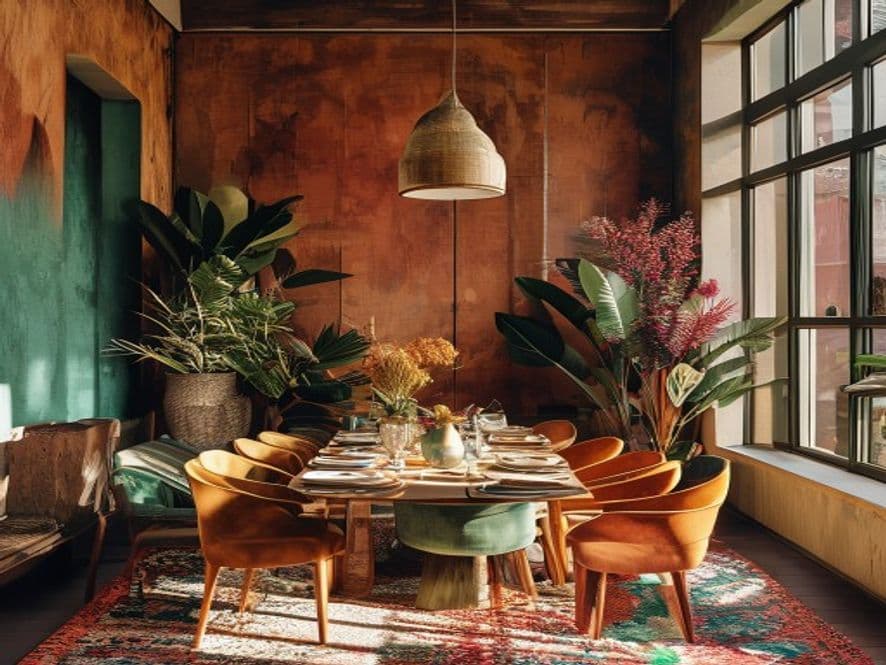
Art Deco has never really gone away — it just keeps getting reinterpreted. The neo deco version that's been gaining traction in dining rooms lately is less about gold leaf and chrome excess and more about geometric boldness, rich color, and materials that feel luxurious without being precious. It's a style that takes dining seriously as an activity, which makes it well-suited to the one room in the house where the whole point is to sit together and slow down. These six ideas cover the range from small changes to full room commitments.
1. A Geometric Pendant Light as the Room's Anchor
In a dining room, the pendant light over the table does more work than people give it credit for. In a neo deco space, this is the place to make a statement. Brass or blackened metal in an octagonal, hexagonal, or stepped geometric form is the most direct design language this style uses. The fixture doesn't have to be large to have presence — even a mid-sized geometric pendant at the right drop height changes the energy of the room.
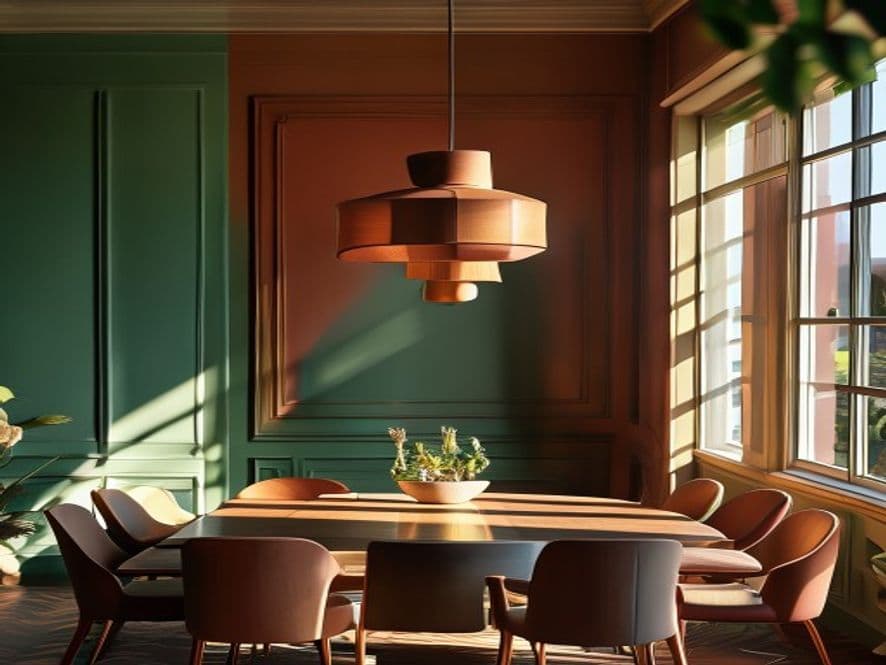
Drop height matters more than most people realize. The bottom of the pendant should sit roughly 30 to 36 inches above the tabletop. Too high and it loses its visual relationship to the table. Too low and it blocks sightlines across the room. Get the height right first, then decide on the fixture style.
For bulbs, Edison-style filament bulbs at low wattage give you the warm amber glow that suits the neo deco palette. If you can put the fixture on a dimmer — which you should — the room transforms between daytime and evening use in a way that makes the dining space feel genuinely versatile.
2. Fluted or Curved Dining Chairs
Chair choice is where neo deco dining rooms tend to diverge most from regular interior design advice. The shapes that work here are curved backrests, fluted upholstery panels, and sculptural silhouettes — the kind of chairs that look like they have opinions. Velvet upholstery in deep green, midnight blue, warm mustard, or cognac leather tends to suit the style well.
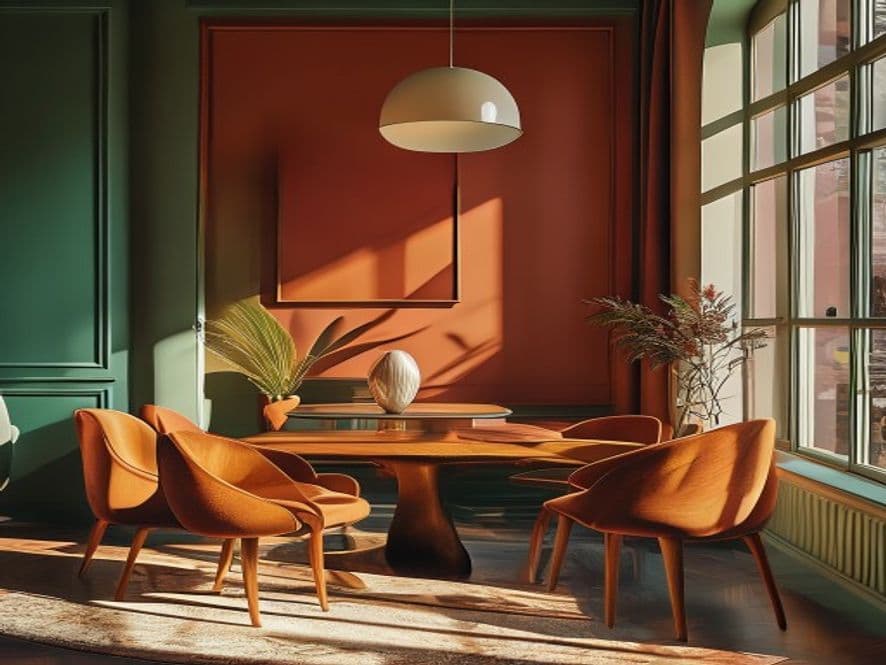
You don't need every chair to match. In fact, mixing two complementary styles — say, a curved velvet chair at the head of the table with more streamlined chairs along the sides — gives you the kind of layered look that makes neo deco spaces feel considered rather than assembled from a single product range. The rule is that materials should feel cohesive even if the silhouettes differ.
A dining chair that nobody notices is a missed opportunity. Neo deco doesn't believe in missed opportunities.
3. Dark Paint or Paneling on One Wall
The fastest way to shift a dining room toward neo deco territory is to paint one wall in a deep, saturated color. Forest green, inky navy, charcoal, and deep burgundy all work. If you want to add a more explicit architectural reference to the Deco period, paneling in a stepped or geometric pattern on that same wall amplifies the effect considerably.
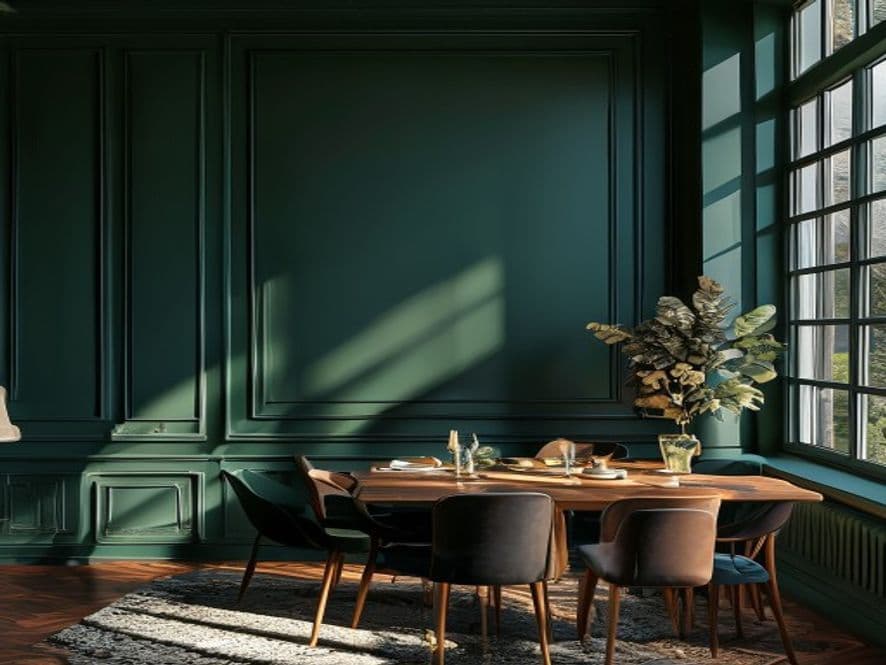
What the dark wall does is give the room a sense of depth and enclosure that white or light walls can't create. Dining rooms benefit from feeling slightly intimate. A dark accent wall — especially behind a sideboard or buffet — does that without making the whole space feel heavy. Pair it with a large mirror to bounce light back and keep the room from going too dark.
4. A Marble or Stone-Look Dining Table
Art Deco interiors leaned heavily into stone and marble surfaces, and neo deco has kept that preference. In a modern dining room context, a marble-top table with a geometric or tapered metal base sits at the center of the style. Real marble is an option if the budget supports it, but sintered stone and high-quality marble-look porcelain surfaces are now good enough that most people can't tell at the dining table.
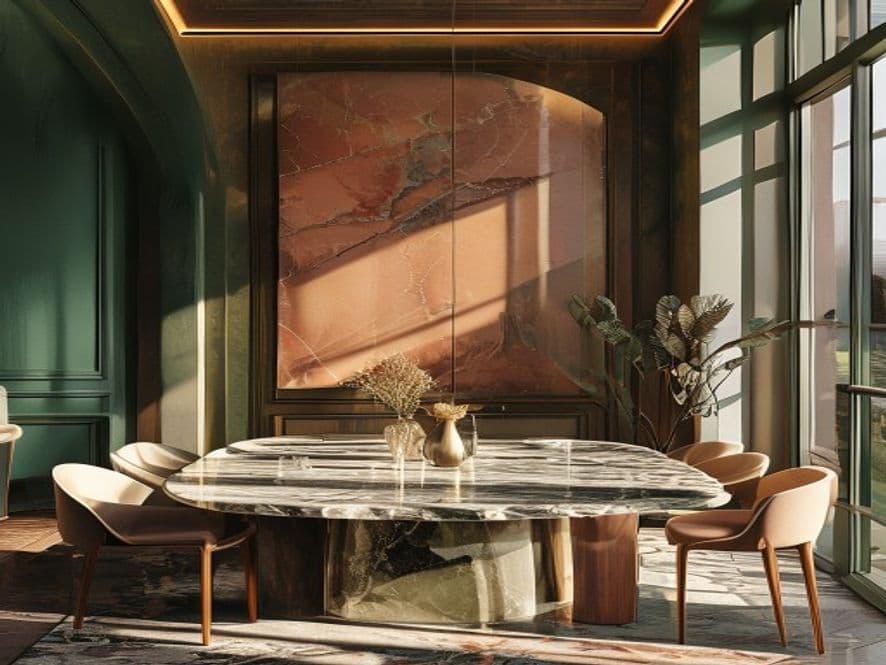
The base matters as much as the top. A solid brass or blackened steel base in a stepped Art Deco form reads very differently from a plain hairpin or trestle base. Look for bases with some sculptural quality — a pedestal with geometric facets, a crossed frame with flat bar stock, or a hexagonal column. That's where the neo deco reference sits most clearly.
5. Table Styling With Geometric Glassware and Candleholders
Neo deco expresses itself well in the details, and the dining table is the best place to let those details do their work. Geometric glassware — faceted tumblers, angular decanters, ribbed wine glasses — is easy to find at most price points and immediately reads Deco. A cluster of candleholders in varying heights, in brass or smoked glass, adds warmth without requiring a formal centerpiece arrangement.
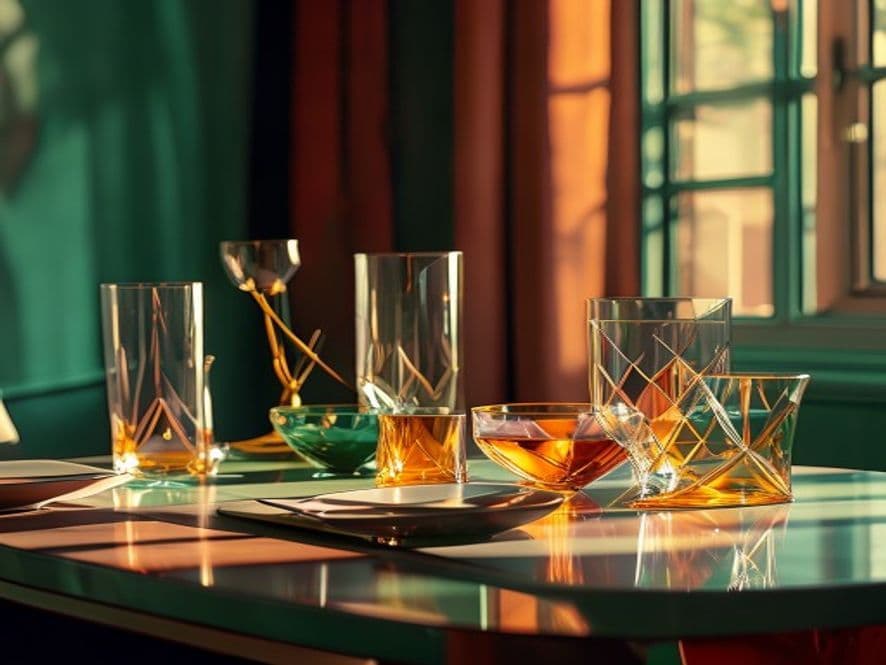
Napkin rings in a geometric form, placemats in faux snakeskin or a step-and-repeat geometric print, and a small vase with a single stem or minimal dried arrangement round out the table without overloading it. The point is that each element has a clear shape. Neo deco styling is geometric even when it's not trying to be — the objects should feel architectural.
6. A Sideboard With Sculptural Hardware
A sideboard in a neo deco dining room does double duty as storage and as a secondary focal point. The piece itself should have some presence — a lacquered finish in a deep color, cane or fluted front panels, or a two-tone combination of wood and metal. But the hardware is what brings it firmly into this aesthetic. Geometric drawer pulls and knobs in brass or oxidized bronze shift even a fairly plain sideboard into territory that suits the style.
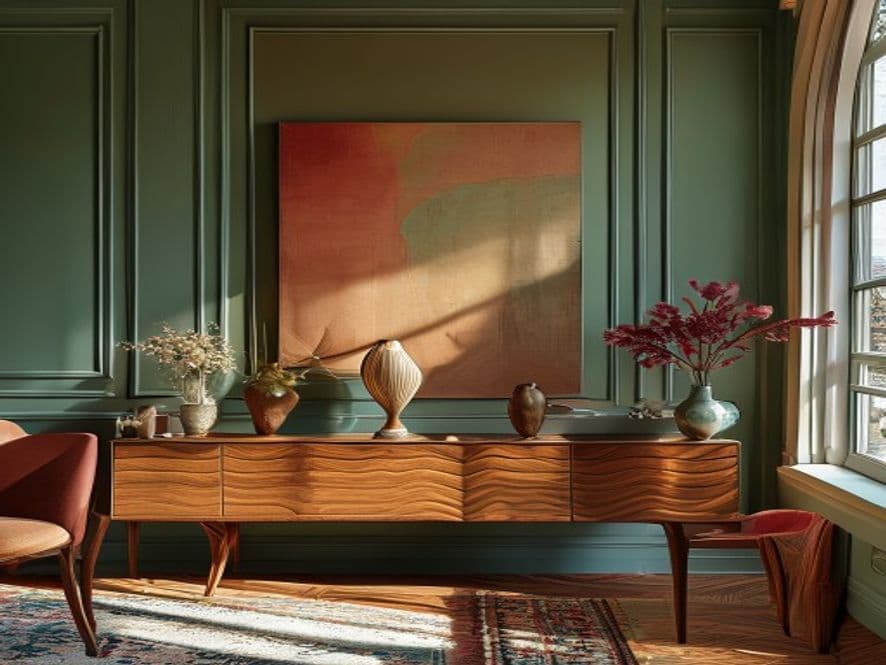
What goes on top of the sideboard is part of the room's visual story. A large rectangular mirror with a stepped or geometric frame, flanked by two symmetric table lamps with geometric bases, is the most direct neo deco arrangement you can make. It's also genuinely functional — the mirror extends the light, the lamps create ambience, and the whole setup frames the wall in a way that makes the room feel finished.
Neo deco isn't about doing more. It's about doing specific things precisely.
The dining room is an interesting room to work with because it's used in a specific, contained way. You're not in it all day the way you are a living room or bedroom. That gives you a bit more permission to make bold choices — a dark wall, a dramatic pendant, chairs that have real personality. Start with the light fixture and work outward. Everything else takes its cues from that.